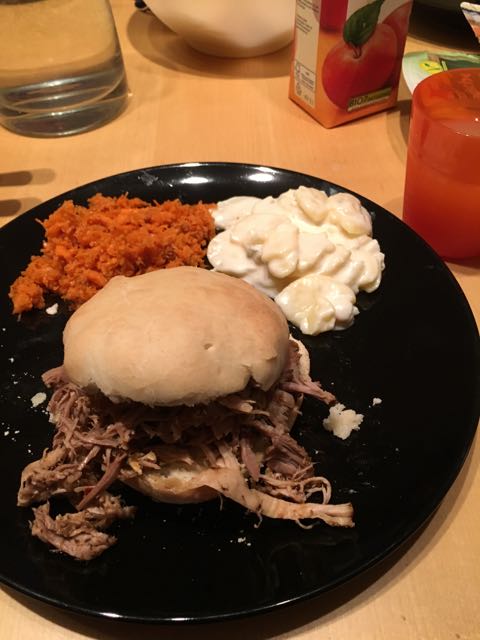
'Low and Slow' Pulled Pork
Pulled Pork from the Weber Q200 Gas Grill
Questions in advance:
- Can it be done? - YES. (actually not, but with tricks and many trial runs)
- Is it fun on the Q? - NO. (but somehow yes, the journey is the goal)
- But I really want to!? - ME TOO ;-)
Pulled Pork... the mother of BBQ. The goal that every home grill master will eventually attempt. The reason why we men always linger at the BBQ smoker station and Water Smoker and consider whether it makes sense to get a second or third device.
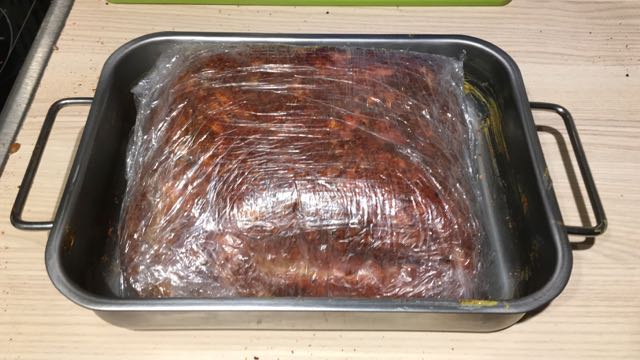
Setting aside fun, let's analyze what makes Pulled Pork for me: Firstly, it's about pork shoulder or pork neck, which must have excellent quality. Since these are not the most expensive cuts today, I can still ensure super quality from my trusted butcher. Now comes the seasoning. The spice mix to suit your taste is made and the piece is marinated over a longer period (engl. rub). Finally, the piece is prepared at a low cooking temperature, which should be below 130° Celsius. Recommended are constant 100-110° Celsius. Through the classic preparation on the smoker, the piece is gently infused with smoke flavors during the cooking time. For serving, coleslaw and homemade hamburger buns (engl. Buns) are used. Barbecue sauce, I find rather hindering for Pulled Pork, as I've always had so much juice and flavor in the meat that a sauce would only overpower the result for my taste. Towards the end of the cooking phase, you could glaze it with the sauce if you really want to. The pulling comes last, where the tender meat is pulled apart into pieces (engl. pull).
Short Check:
- Meat and Marinade? OK!
- Space in the cooking chamber for the meat? Tight.
- Low cooking temperature? Moöp! No, I don't have that in the Q.
- Smoke and smoke flavors? Moöp! Not available out of the box.
- Sides and buns? OK.
- Pulling and keeping warm? OK.
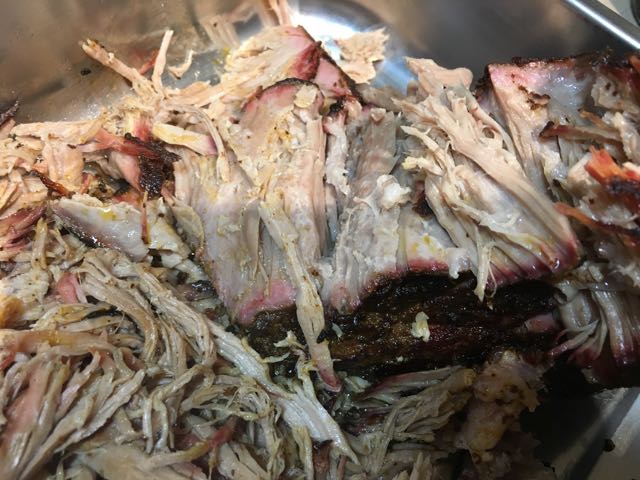
Regarding the point of space in the cooking chamber, one must be realistic. The Q is limited in space, especially because creating an indirect grilling setup also loses additional height. Nevertheless, you can surprisingly fit a lot under the lid without touching. I recommend buying according to the height and simply assuming that only about four people will be grilled.
That this project is entirely uncomfortable and inefficient and is carried out solely to prove that Pulled Pork can also be done on the Q, I think I actually don't need to emphasize. So let's get started.
Low Temperature in the Weber Q200
The most important point is the temperature and the stability of the temperature.
The Q is too hot in the smallest setting. For me, it fluctuates around 140-145° Celsius depending on the outdoor temperature and the fill level of the bottle. As I know from my own research, the value among Q owners ranges down to 120° and up to 160°. If you deviate from the factory regulation scale, I would assume that something is wrong with the grill or you are using a different base pressure (in Germany, Weber uses 50mbar).
The first method you can use to lower the temperature is the stone method. A stone or a piece of aluminum foil is clamped under the lid of the Q so that fresh air is drawn in. This makes the smallest stage of the regular regulation somewhat usable. For this to work well, there should be no wind. Here are some pictures with a piece of PP for two people.
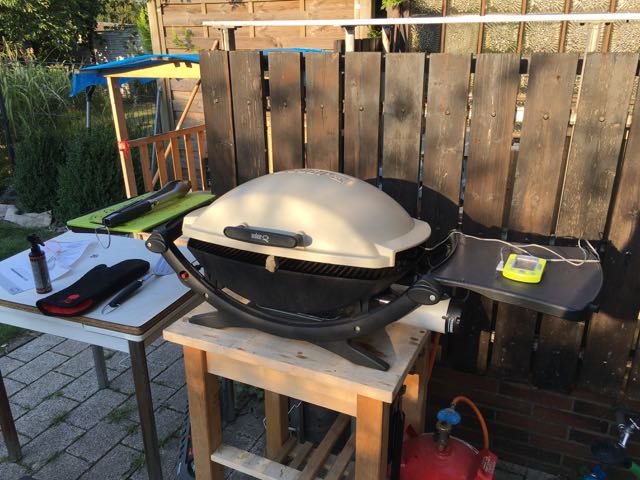
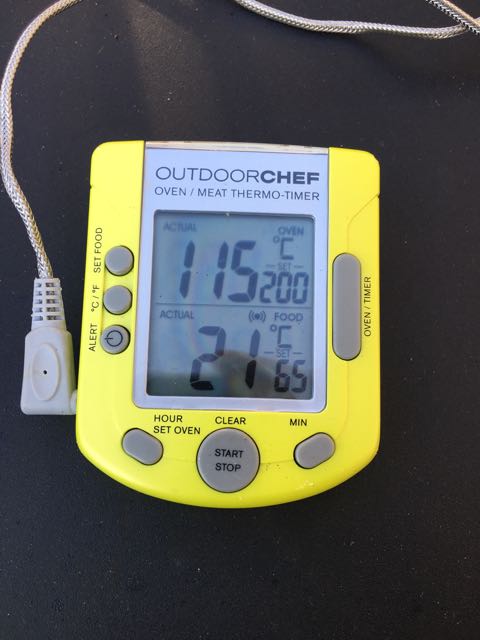
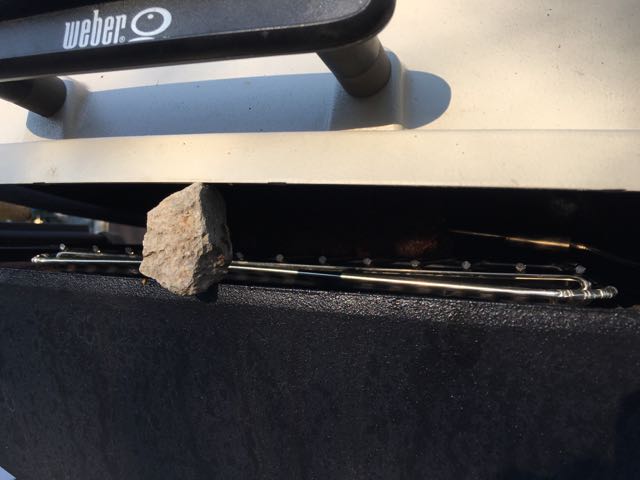
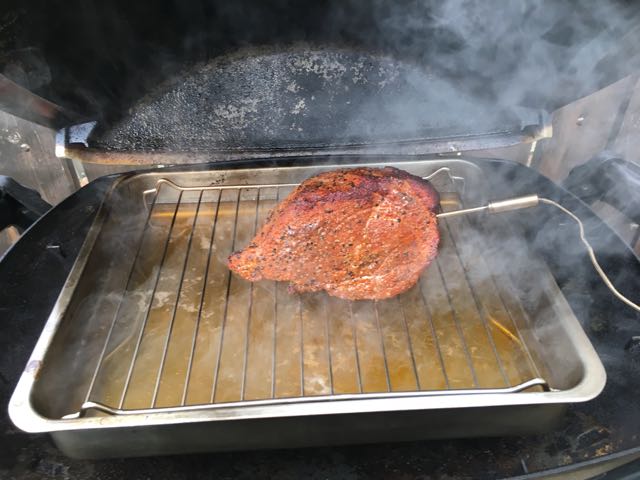
With the stone, I got good results as long as the weather cooperates. If wind comes up during the cooking time, it becomes very problematic. In any case, water should also be used in the Q. From the beginning, I have only worked with a water pan. On the one hand, the temperature is smoothed out by the hot water, and additionally, the Pulled Pork feels more juicy. Whether water, beer, whiskey, or apple juice, I haven't been able to notice a difference yet. However, it feels more special when you can say that the PP was cooked over beer.
Another method I tested is further closing the gas supply. With an adjustable pressure regulator or also with a Q trick, you can make the flame smaller than the minimum regulation. The trick is that if you turn the gas valve from the Q just past the maximum position outside the scale, you can reach a point where the flame burns very low. I strongly advise against these two methods. The disadvantage and danger when you turn the Q so small is that the burner gets blown out by wind gusts. This has happened to me multiple times during testing. If I want to reliably do a long job, it's not an option for me that I always risk the grill going out and unburned gas leaking. You can secure yourself against the warning threshold for lower temperature of, for example, a Maverik because the cooking chamber then cools down very quickly, but I can only advise against it. It didn't work for me this way. With the newer Q models with a dual-burner, it might behave differently, but my Q 200 is too wind-sensitive.
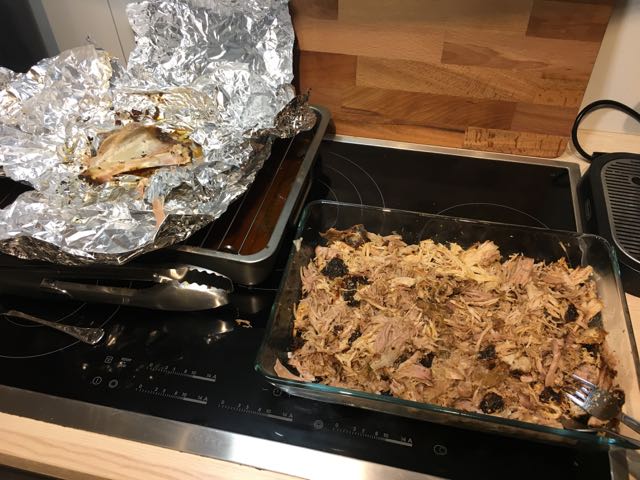
In case of wind, I therefore use an alternative cheat instead of the stone method. I accept the initial 45-60 minutes at 140° Celsius available to me and smoke the pork piece with the lid closed on the Q. Afterwards, I move it into the oven and slowly increase the core temperature there. This is certainly highly against grilling principles, but it is definitely better in taste than if you rub with LiquidSmoke and then exclusively work in the oven.
Ultimately, the Q has its limits here. I have made Pulled Pork entirely on the Q. But in everyday life, it's more about it tasting good for me and my guests. The cheated Pulled Pork variant has been able to convince me as a simple alternative. Most smoke flavors are absorbed anyway at the beginning of the cooking phase, so you lose a bit of tenderness, but it works reliably without another grilling device and I've already done it this way several times.
Then bake some buns, prepare a little salad, and invite friends.